Friday, 30 October 2015

Drawing inside university:
Today, we were focusing on reflections, people and skylines. My group began in CAA2/01 where I drew my view from the window. I used a fine liner to draw the interior of the building, such as the window and table and a tonal pencil to focus on the skyline outside. I drew in great detail and was pleased with the outcome. Some of the building perspectives were out by a bit because I didn't plan out my drawing before adding the detail. Next time, I know the right approach for drawing buildings although this tonal pencil drawing was the strongest out of the three I did. It has an illustrative style which I like although, if I had planned it more accurately, the outcome would have been more successful.
The second drawing I did was in the atrium and this time I was focusing on people. I didn't feel as comfortable in this environment and didn't start strongly. I used Biro pen this time which I usually enjoy working with as you can bleed it and create a range of different effects. However, I didn't spend as much time on this image and paid less attention to detail which really reflects in the drawing. The image is incredibly rough and looks rushed. However, the figure on the left worked well and I like the detail in the clothing. I also managed to include shading it is a clear image but it does not meet the standards of the first drawing,
My final image was the weakest out of the three. I thought using a marker pen would create big, dramatic lines, which it did. However, this did not look effective in the image and some lines were too chunky and overdone. It contains little shading although the perspectives on the balcony are accurate. Perspective is something I personally struggle with so this is an achievement for this particular drawing. Overall, the image looks untidy and basic and does not reflect my drawing skills as it was again, rushed, and done with little care.
The exercise was good because it refreshed my skills and I enjoyed drawing. However, I do work better working in  a comfortable environment where I have more time to draw. If I had taken more time with the second two drawings, the result would have been better. 

Monday, 26 October 2015


Typography:
Typography is basically words that are visually attractive and this can be very powerful. Willi Kunz states 'The function of typography is to communicate a message so that it effectively conveys both its intellectual meaning and its emotional feeling'.

In this lecture, we learnt the difference between typeface and font as font is it use and typeface is what you see. We also were taught about typeface terminology through informative diagrams such as this one:


http://community.avid.com/blogs/adman/archive/2007/10/19/title-22.aspx
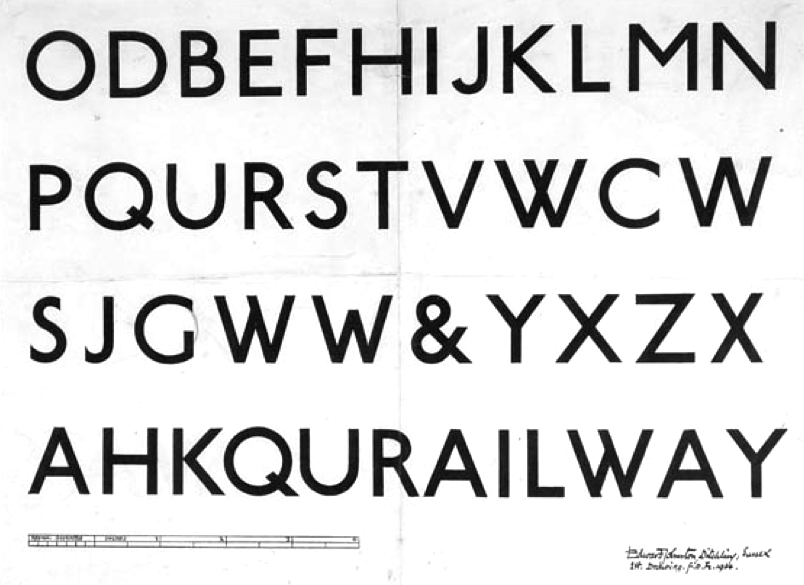
This is advanced and confusing at first and I was unfamiliar with most of the terminology. However, after the terminology section of the lecture, some interesting examples of typography was shown. We saw works from Johannes Gutenberg, Felice Feliciano,William Morris, Edward Johnson, Barry Deck and many others. This lecture was mainly a history lesson in typography to show how it had evolved, especially with the advancing of technology. I have placed some examples that I found interesting and had a big influence on typography. 

https://en.wikipedia.org/wiki/Felice_Feliciano
http://www.morrissociety.org/morris/artbookdesign.html
http://luc.devroye.org/fonts-27451.html
This font is used for London's Underground travel system and is very popular. This is an example of how technology has influenced typography as well as graphics on a whole. 

                                             
http://typostitch.com/2013/04/24/0023-barry-deck-template-gothic-1990/


Post-it Typography:
In this seminar, we were asked to create five characters in an individual style. This linked on from the typography lecture we had earlier that day. Everyone created 5 letters in a unique style and we then organised them on a table. I was given the letters 'E', 'F', 'G' and I did a variety of things with these letters. My favourite out of the four is the capital 'E' that has a geometrical style. This is followed by the smaller letter 'e' which has quite an abstract style.
I found the task challenging because I hadn't done any prior research into typography and typefaces although I did get some ideas from the typography lecture earlier that day. I enjoyed the creative side of this activity but the 'F' and the 'G' are both simplistic, with the 'F' being my least favourite. 

All together, the letter forms looked really interesting and there were some really good examples of typography. Everyone used the post-it note in a different way as some ripped the paper and some used a symbol to represent the letters.  A personal favourite is the waves that represent the letter 'C' because 'sea' phonetically sounds the same as 'C'. This is a clever response to the task. 
Overall, the task was a good way to reflect on what we had learnt in the previous lecture. It was challenging and all my characters were of a different standard although I liked the creative side of the task and being able to have some creative freedom. 

Friday, 23 October 2015

Yorkshire Sculpture Park:
When going to Yorkshire Sculpture Park (YSP), the weekly theme was fringes and edges, which was good to take into consideration when going round the park as there were plenty of cases of fringes and edges. For example, the man made structures have been effected by the natural elements because of their location. This means they have been, in some cases, worn and also have leaves that have fallen off trees on them. As well as this, there is a big contrast between the vibrant and harsh colours of some of the sculptures and the warm autumn surroundings. This demonstrates fringes and edges well.
I did admire some of the sculptures, such as the one in the image above. Although it did not directly fit with my project and I struggled to link it with my studies, I admired it and thought it was interesting. 
This instillation was also one of my favourites throughout the day and I thought it was the one most relevant to graphic design because of the typography and colours. It read 'Art Makes Children Powerful' although this was hard to read when looking at it from any angle. I think the piece looks especially good against the duller colours of the leaves, grass and trees, which is again an example of nature combining with something man made.
Whilst I was at YSP, I thought it would be a good opportunity to take some images of natural framing which would coincide with my current studio project. It was my next step to take some images of natural framing and I found some great examples to include in my primary research section. I found it a beneficial trip and I got some great primary research as well as being able to look at some other forms of art and getting inspiration. 

Thursday, 22 October 2015

Gary Hustwit- Urbanized film


http://clubs.epoka.edu.al/movie-screening_urbanized-a-documentary-by-gary-hustwit/bld-urbanized-poster-back/


The film we watched was focused around urban design. This appears to be more focused on architecture, however, it is also relevant to graphic design as it looks at how design can solve issues.
Urban design was described as 'language of the city' and this also introduced the film, which began in Mumbai. The solution to 90% of Mumbai being slums was cheaper, efficient houses that could be built. This is one of the examples of a strategy of solving a mass problem and demonstrates how design can improve a place. However, Stuttgart 21 (S21) demonstrates how design may not always be the best or most popular answer. Citizens got heavily involved in the debate of S21, which planned to rebuild the old train station. Demonstrations were held in protest to save the historical station, as well as the park and the ancient trees within the park, although not everyone agreed with this point of view and wanted the update to take place. This shows that not everyone has the same opinions about a design and not everyone will like it. Eventually, S21 went on with the updating of the station anyway, but this demonstrates the power and influence design has.

Brasilia in Brazil also had mixed opinions. Some thought the simplicity of the place was admirable although others thought it was disconnected and too broad because roads would not interfere with Brasilia, meaning walking distances are further. This is an example of an idea being good in theory yet not working so well in practice, as some designs do.

http://www.theguardian.com/environment/blog/2011/apr/12/energy-use-households-monitor-electricity

Tidy Street in Brighton is another case of design dramatically influencing people. Electricity usage was recorded on the road with spray paint every day to try and make people conscious of conserving electricity and it worked. It engaged and helped the community which shows what we can do using design and all they did on Tidy Street was alter a surface to change how a community lives their lives.

Some new urban city designs such as the self organised City Garden Project in Detroit, Tidy Street in Brighton and Khayelitsha in Cape Town are all good examples of how design positively impacted a place unlike the lack of recovery plan in New Orleans after Hurricane Katrina.

The film was beneficial as it demonstrated the power of design and how design can affect lives and communities. 

Wednesday, 21 October 2015

Convergence
Convergence is about change and union and forcibly bending something together and to bend something together is to deform and influence something and therefore create something new. An example of this would be circuit bending. Often, children's toys are circuit bended to create something different or new. This may be music or a sound but whatever it is, the toy is being used for a different purpose and therefore this is an example of convergence.

William Burroughs also practised convergence in literature as he believed literature was behind art by years and it had not progressed as art has. Burroughs used the cut-up technique, which was discovered by Brion Gysin and involved cutting up pages and randomly rejoining them back together, to create a variation of random sentences and combinations. 'The Naked Lunch' was the first use of this technique and Burroughs wrote up the results and the book was published.
I recreated my own cut-up method, using a newspaper.
Although the caption now makes sense (sort of), the cut up article did follow the principal of Gysin's cut-up technique.
The aim of the task was to think about convergence within our work and how to combine two principals that may not harmonize to create something different. I can now consider this new concept in my work and try and put things that wouldn't necessarily go together, together.

Thursday, 15 October 2015

Wednesday, 14 October 2015

Reflective Writing:
We started the seminar with a definition of reflecting which was: 'reflecting is processing, recording and gaining new perspectives'. Reflective writing, therefore, is talking about your work from different perspectives and how you were influenced and how it went. It is really a way to finalise your thought process and sum up your ideas. This is beneficial to, not only the person you are explaining your work to, but to yourself, as you can reflect back on your ideas and how you got to the point you are at.
In the seminar, we were given questions to answer in two columns and I did, in detail. I feel one of my strong points is analysing and criticising my own work as well as communicating through writing.
Column one: Q1) What did you do? A1) Research.
                     Q2) Why?  A2) To expand and develop my idea and the response to the brief I was given as well as to explore the brief and the outcomes that were possible.

Column two: Q1) How did you feel? A1) Overwhelmed at first as I was too precise with my research. It was only when I broadened my approach that I began to understand what to do and how to deal with the information.
                      Q2) What went well? A2) Being able to think in a different way and approach the research from a new and effective perspective after initially struggling with the task.
                     Q3) What could have been better? A3) Not panicking at first as it turned slowed me down as I spent too much time researching ideas that were not relevant or were too precise.
                     Q4) Would I approach it differently next time? A4) Next time, I would organise my ideas more coherently, using some of the methods we learned in the 'How to Have an Idea' seminar. This would mean I wouldn't go off on a tangent and could visualise my ideas clearly. I would also make my research broader next time.

It was useful to be able to clarify where and what went wrong when starting this project and be able to communicate that to myself. I feel that I have adopted a new perspective when it comes to research.

Thursday, 8 October 2015


Drawing around Huddersfield:
During a process and production session, we went out into Huddersfield and sketched interesting and relevant things we saw. The aim of the task was to revise our drawing skills whilst also collecting primary research. 

I originally found the sketching difficult as we had to consider perspective and proportion. I feel that the final result of my sketch turned out well and I actually enjoyed doing it. However, because I did the sketch in pen, I  could not redo the centre section of the sketch which should have been the end of the building yet it still went on. I feel that this sketch was successful in some ways, such as the shading and the proportion, yet the perspective could have been better. 
The next study was done in layers on tracing paper. I decided to focus on a logo which includes symbols and typography, which are both relevant to graphic design. I did a layer at a time, starting with the main focus, the logo, and worked outwards to the frame of the logo and an outline of the surrounding buildings. I feel this study turned out well and I enjoyed it. As the day went on, my confidence in drawing was built up again, making it worth while. Drawing on different materials with different backgrounds also was useful and I could use the materials to my advantage.

Wednesday, 7 October 2015

Research Seminar:
Parallax:'Parallax is defined as an object appearing as if it is positioned differently when it is looked at from different angles or different positions'.
(http://www.yourdictionary.com/parallax)
I originally struggled with this concept and didn't see the relevance to the seminar subject. However, it is linked with perspective and the way we look at things. In the seminar, we were told to play a game of twenty questions with our partner. However, the questions had to be pre decided so therefore, you could not ask a question in relation to the last answer. It was hard to guess what the object she was thinking of was, The next task, we were allowed to ask questions as we went along. This means, we can use previous answers to construct our next question and the object was therefore easier to guess.

The aim of the task was to look at solving the issue from two perspectives. Both involved asking questions until we could understand what the object was but both approached it in a different way. We can apply this to research methods.


Monday, 5 October 2015

How to Have an Idea:

"An idea that is not dangerous is unworthy of being an idea" - Oscar Wilde

In this seminar, we discussed the process of an idea which formed this pattern:

 Preparation -> Incubation -> Illumination -> Verification

This pattern then linked back around as you work through an idea and let it grow. Another way of displaying this was the double diamond. An example of a double diamond is below although within our double diamond read: 'research' and then 'resolving', which can also be referred to as the brief and the solution to the brief.
http://www.greatergoodstudio.com/approach/

You can find ideas through many different forms of inspiration. For example, an entry point which may lead to a train of thought from something you find intriguing. It could also be through a discussion or a debate. Gathering this information that is formed from an idea also may be a challenge. It was helpful to be told some ways of organising this information, such as, in alphabetical order or chronological order or put them into categories or through a hierarchy. I will be using some of these methods when organising my research as I may lose track of an idea and will more likely hit a dead end. 

This idea may come from an ideology, an desire, culture, society, religion, relationships, gender, or anything we can relate to. I found this seminar insightful because my studio project is starting slow and I was finding it hard to process the many ideas going through my head. This seminar helped me to channel my ideas effectively and allow me to choose which ones to take forward.   

Thursday, 1 October 2015


Creating Posters on Adobe InDesign:
 The aim of task was to familiarise ourselves with Adobe InDesign whilst working with grids. Examples of posters were given for us to use as a guideline and I found it helpful as I am not confident in using Adobe InDesign. This programme is similar to Adobe Photoshop which has a lot of the same tools, which means the skills I learned from this tutorial can be transferred into Photoshop work. The programme is simple to use when you are familiar with all the tools and how to use them.
 When I had finished, I was impressed at, not only how good the quality of the posters were, but also how easy they were to recreate. Josef Muller Brockmann's work was included in the example posters so I tried to mimic the poster, giving me a broad exploration into InDesign. Brockmann's work is interesting and this made recreating the posters more enjoyable.
 I screenshotted these images to show what tools I was using when creating these posters. I took the grid off to see a preview of how the finished piece would look. However, InDesign gave an introduction to grids and how to effectively use them when considering layout. The pieces of work I produced were structured and well laid out because of this.
After Effects Session 1:
In this session, we set up our blog posts and started creating animation.
We also set up a Vimeo account so we could upload our animations onto it. We could now begin to start documenting our lectures (labelled Theory as Practise) and Process and Production session. We created our blogs on Blogger, which is one of many sites that you can blog on. Our tutors can track my process through the blogs, where I will reflect what happened in the lecture/session as well as how I found it and how it helped. I am confident with my writing abilities so feel that this would be a good way to recap the session and also refresh on what I have learned. It is also great to have an archive of all the lectures and sessions throughout the year.

For the rest of the session, we were told to represent a book in a number of slides (minimum of 10). As I was unfamiliar with Photoshop, I was unsure of what I was going to do and began to panic. I knew Trainspotting was my book of choice as it is my favourite although I didn't know how to communicate this idea.
I began looking at book covers for Trainspotting. I liked this cover because of the simplicity and authenticity.
https://maxdunbar.wordpress.com/2010/12/18/classic-books-trainspotting/
I wanted to use this symbol in my animation so I digitally traced it on Adobe Illustrator although this looked plain on the page. I decided to stick to the iconic orange background and white text that is linked to Trainspotting. I added the also iconic phrase, 'choose life' to the top of the page but this still didn't look interesting. I decided to play on the theme of heroin that occurs throughout the plot. I decided that the skull would be a metaphor for heroin and I the match and lighter would be heating up the heroin (skull). I like this idea because it is clear and effective and also follows a colour scheme. 
I decided then to add the whole famous quote line by line. I split it up as if it was being spoken which works effectively as some of the sentences were in large chunks which meant a lot of the text would all come at once. I think this works as an animation and it does not look too simple now. I then got a track from Youtube Audio album called Tactical Confusion. The song works well with the graphic and also the book as it is rock-like and sounds like a background track. It is uncopyrighted and therefore it is alright to use over my animation.

This workshop has allowed me to gain confidence in Photoshop and Illustrator and I can now use these programmes effectively. I am yet to edit my animation but so far I am happy with the outcome.